
More than half the Sensex companies have declared their results for the third quarter and there are more positive surprises than disappointments.

Investors engaged in profit booking in the recent gainers at attractive and higher valuations.

So, how is it different from the 150cc Honda CB Unicorn? Naveen Soni reports on what the Unicorn 160 has to offer!
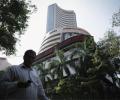
The higher rate cut by RBI is positive for rate-sensitive sectors in the medium to long term.

With more firms now offering stock options to their chief executives, the salaries of these managers are sky-rocketing.
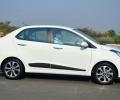
Buoyed by strong sales, Maruti Suzuki, Hyundai and Honda have scaled up their annual targets, but others are still stuck in low gear

Nifty 50 firms' net profit estimated to grow by a modest 3.1% in Q2, reports Krishna Kant.

TVS should be prepared for a rough ride as Bajaj Dominar, Mahindra Mojo, Royal Enfield Classic 350 and many others are stepping on the gas for a slice of this category.

Does Hero MotoCorp's first ever 125 cc scooter do enough to stand out in the ever-growing 125cc scooter segment?
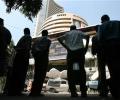
The 30-share Sensex ended up 12 points at 28,517 while the 50-share Nifty ended nearly unchanged at 8,660.

Falling margins, high inflation pitting workers against management.

At Rs 80,000 (on-road,Pune), the bike is priced slightly lower than its carbureted competitors like the Pulsar AS150 and Suzuki Gixxer. But when it comes to styling, overall refinement and dynamics, the Xtreme Sports has a lot of catching up to do, says Narendra Sharma
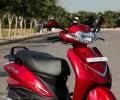
Solid looks. Solid features. Affordable prices.

India Inc is ready to diversify into unchartered areas.

Most analysts expect growth in the sales of Nifty-50 companies to decelerate, albeit marginally, in the quarter ended December compared to the corresponding period of 2013-14, with metals and real estate companies pulling down earnings.
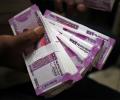
Fresh investments by corporates up just 5.8% in FY17, lowest since 1992

That resulted in a 50-basis point improvement in operating profit margins on a sequential basis.

It looks very different! Very, very different! Plus this is the first bike ever that allows you to change the seat height as per the rider's comfort.

Urban and rural FMCG sales growth data for the last five quarters show the latter outperformed the former consistently.

Riding on a stock market boom since 2009, India Inc's chief executives have been able to salvage a lot of lost pride in their second innings.

As competition hots up, more and more scooter manufacturers are turning their attention to the female buyers. Here are five scooters that are getting the desired attention.

At Rs 52,610 (on-road, Mumbai), the attractive pricing, refined engine and good manoeuvrability makes the Platina 100 ES emerge as a value for money package and a worthy competitor to the offerings from Hero MotoCorp and Honda.

Weak monsoon forecast rekindled fears of higher inflation.

Analysts mostly prefer domestic plays beside select films with foreign exposure.

The upbeat earnings from Reliance Industries will set the tone for the truncated week ahead
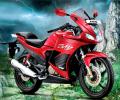
All are entry-level performance bikes that don't cost a bomb!

Jaitley's Budget has the potential to change the face of Modi's Bharat

Maruti Suzuki has given Nexa franchises to only existing dealers.

Most of the index heavyweights are yet to declare their results.

The lumbering Ambassador and Fiat cars, it ruled the Indian roads throughout the 1970s, while the Rajdoot and Jawa as well as the old Royal Enfield motorcycles trailed far behind.

At Rs 72,625 (single disc) and Rs 75,725 (rear disc) (ex-showroom, Delhi), the Hero Xtreme Sports does not package itself as a value for money proposition. What the bike really needs is some weight reduction and a new design.
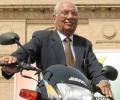
Brijmohan Lall Munjal was a perfectionist, who empathised with people who worked for him.

Looks at 100 km ride on single charge, ideal for big cities
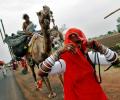
Besides reviving investor sentiments, Vasundhara Raje's regime has brought reforms in the social sector.
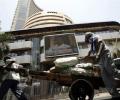
Net profits may dip 4.9% y-o-y, but the silver lining is that performance may be better than the preceding quarter

At present, there are many vehicles that weigh close to the proposed increased weight of 600 kg.
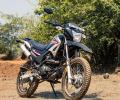
The Hero Impulse was in a massive need for power and the 223cc engine from the Karizma just adds lots of it to the bike which is now more fun to ride, writes Indian motoring website MotorBeam.

At Rs 18,400 per share, value up 100 times since Lehman crisis

Ahead of the assembly elections next year, the BJP has been wallowing in a welter of ideas that has resurrected the debate on populism versus pragmatism, as it has to pander to two important but incompatible constituencies, of the freebie consuming masses and Bengaluru's heavy hitters craving for even roads, pristine lakes and unbroken power supply, reports Radhika Ramaseshan.

The event will be telecast on MSM's sports channels -- Sony Six and Sony Six HD in English - and Sony Aath, the network's only regional channel, in Bengali.
